
*1st Generation dance. A dance that developed in a traditional way – not ‘taught’ by a teacher or choreographer, but ‘learned’ by observing and imitating others in your “village”, where the village’s few dances were the only dances anyone knew. It usually is ‘generic’ – the dance pattern is fairly simple and not tied to any particular piece of music. The dance phrase may or may not match any musical phrase, but the music’s rhythm must be suitable for performing the footwork. This dance may have many variations, but they’re performed at the whim or inspiration of the leader or (sometimes) any other dancer so long as it doesn’t interfere with the flow of neighboring dancers. For more, click here, here, and here.
Song and Dance
Cuileandra is one of those rare dances where the footwork is always accompanied by a particular melody. The formation of the dance is a circle or partners, but there’s no particular choreography as long as the footwork is simple enough to enable the dancers to move in unison. The difficulty comes from the dancers using a shoulder hold in a circle (the number of dancers may vary), dancing while the circle as a whole moves in a circle, sometimes circling around other circles, sometimes dancing circle-within-circle.
In their landmark book on Romanian Dance, Romanian Traditional Dance ©1995 Wild Flower Press, Anca Giurchescu and Sunni Bloland write that the word Ciuleandra is “derived from cileandra or a umbla de-a cileandra, ambling along in a carefree way. Perhaps cf. Hungarian csellegni, to wander or be a vagabond.”
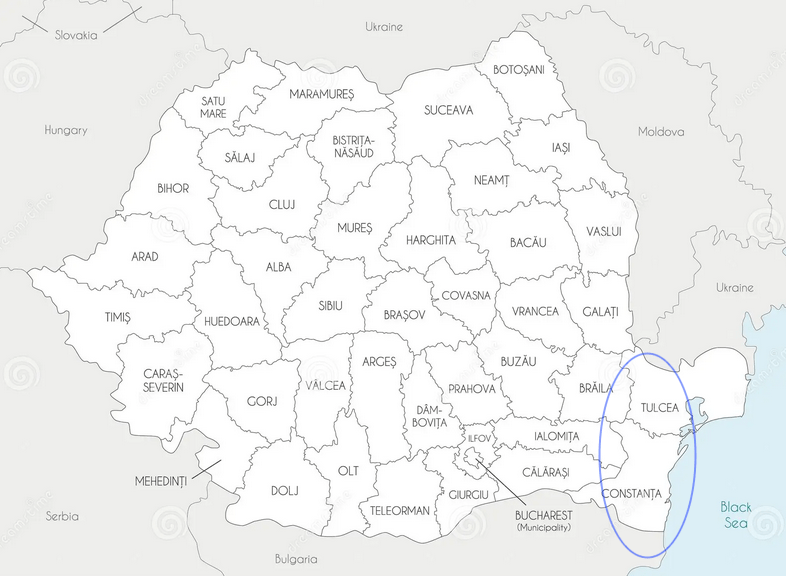
They classify Ciuleandra as a Sirba (now spelled Sârba) – “a very ancient and large dance stratum”, with the Ciuleandra dance family a sub-category that they term a “mixed type”, including Fedelşul (https://www.youtube.com/watch?v=E9uQwQsx9H4), Sfredelaşul, and Tîrcolul. They further state that Ciuleandra is most common in the repertoire of Northern Muntenia,
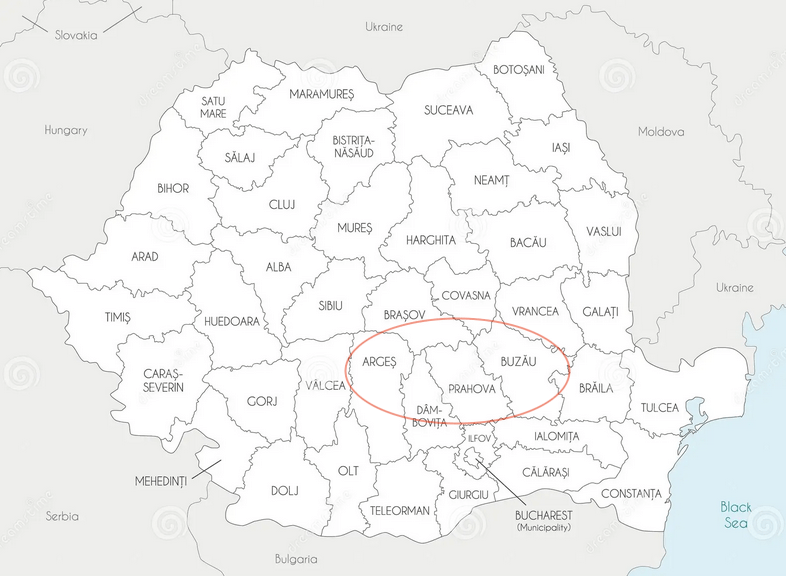
and Dobrogea (variation Fedeleşul).
Ciuleandra is first and foremost a melody, often played instrumentally only. Also popular is a version where one or many individuals shout strigaturi. The most famous rendition of Ciuleandra is a recording by legendary Romanian singer Maria Tanase “the Romanian Piaf”. She performed the song “Ciuleandra” for the first time on the radio in February 1940. The recording for Electrecord was made in Bucharest, in ’56. A translation of the strigaturi she used (reproduced below) can be found here: http://virtualromania.org/music/maria/20.%20Ciuleandra.eng.html
Foaie verde siminoc,
Ţineţi Ciuleandra pe loc,
Şi-nc-odată mai băieţi,
Hop ş-aşa ş-aşa
Ţineţi-o flăcăi aşa,
Până n-ajunge puica,
Şi-nc-o-dată, mai băieţi,
Hop ş-aşa ş-aşa.
Întăriţi-o niţeluş
C-ajunge acuş-acuş,
Şi-nc-o-dată, mai băieţi
Hop ş-aşa ş-aşa.
Mai întăriţi-o de-un pas
C-ajuns şi n-a rămas
Şi-nc-o-dată, mai baieţi
Hop ş-aşa ş-aşa.
Două fire, două paie,
Luaţi Ciuleandra la bătaie
Şi-nc-o-dată, măi băieţi
Hop ş-aşa ş-aşa.
Tot aşa că nu mă las,
Că sunt cu puica pe-un pas,
Şi-nc-o-dată, măi băieţi
Hop ş-aşa ş-aşa.
Două fire, două paie,
Ia Ciuleandra la bătaie
Şi-nc-o-dată, mai băieţi
Hop ş-aşa ş-aşa.
Green leaf of ‘siminoc’,
Keep the circle in place,
One more time,boys,
Hop-and-so-and so.
Keep it like that, lads,
Until my darling catches up to me,
One more time,boys,
Hop-and-so-and so.
Strengthen it (speed it up) just a little,
She (‘puica’) is close to catch up with me,
One more time,boys,
Hop-and-so-and so.
Speed it up it one more step,
she caught me up, but didn’t stay,
One more time,boys,
Hop-and-so-and so.
Two straws, two grains,
Let’s stomp* the Ciuleandra,
One more time,boys,
Hop-and-so-and so.
Keep it like that, don’t let it down,
‘Cause I’m on same step with my darling,
One more time,boys,
Hop-and-so-and so.
Two straws, two grains,
Stomp the Ciuleandra now,
One more time,boys,
Hop-and-so-and so.

Ciuleandra is deeply embedded in the Romanian psyche. A novel with that name was published in 1928 by Liviu Rebreanu. A film based on the novel was released in 1930 (Director, Martin Berger), the first movie with sound made in Romania. Source: https://www.youtube.com/watch?v=zUjcG0gPGD8. In 1985 another version of the novel was filmed (director Sergiu Nicolai), which was selected as the Romanian entry for the Best Foreign Language Film at the 58th Academy Awards. Below is the scene when our boyar (Romanian for rich landowner) first meets a peasant girl, dances Ciuleandra with her, they fall in love and marry. (However they DON”T live happily ever after!). The scene doesn’t show the feet, but it looks like the usual simple footwork is in play. What the scene does show is the excitement generated by the swirling, multi-layered circles and ever-faster dance.
Ciuleandra, the original Romanian solar dance.
‘Ciuleandra’ is an old folk dance, originating in the Wallachian region, whose pace increases gradually till the end when it becomes very rapid The song is nothing but a dance lesson, the singer explaining in detail the necessary steps to be made in order to flow with the rhythm. It is a Dionysian dance in which each one expresses his feelings through this particular rhythm. ‘Ciuleandra’, the song itself is a challenge, starting with its name. It is a word made up of two parts the “thistle” and “leandra”, which in folk terminology have the meaning of a disorderly movement, randomly made, with no specific purpose. The resemblance between the disordered, randomly “gone by the wind” movement of the thistles with that of a young girl’s first thrill of love in its blooming stage is not farfetched, as it is commonly met in many folk traditions. Source: lablouseroumaine
Of the MANY YouTubes labeled Ciuleandra, I could find none performed as part of a village event. All are filmed with an audience in mind.
Ciuleandra in pop culture
It seems the strigaturi or melody used by Maria Tanase (see above) are currently being used in many genres. Here’s 22 (that’s not all!)

