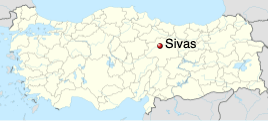
Anatolia, the peninsula now occupied by Turkey, is a cradle of civilization, perhaps THE cradle. However Turks, the last people to settle there, got to spell the names of ancient towns THEIR way. The Turkish name Sivas (Kurdish Sêwas) is a truncated form of its Byzantine Greek name Sivasteia, from the Koine Greek name Sebasteia. The ancient city of Sebastia (Sepastia), is the Latinized version of the Greek Sebasteia (Σεβάστεια) which is itself a feminine form of Sebastos, the Greek equivalent of Augustus. The city (originally named “Megalolpolis”) was founded by the Roman emperor Pompey around 100BC. There was likely settlement on the site before that, but not yet by Turks. In the early 1020s, the Byzantine (Greek) emperor Basil II traded the region around Vaspurakan for the region around Sebasteia to Armenian King Seneqerim Ardzruni, who settled in Sebasteia with thousands of his Armenian followers. The region around Sepastia became known as “Lesser Armenia” (and not just to Armenians), to distinguish it from “Greater Armenia” to the East. Sebasteia was the first important city to be plundered by newly-arrived Turkish tribes in 1059. They burned it for eight days, slaughtered a large part of its population and took many prisoners. In 1174, the city was captured by Seljuk (Turkish) ruler Kilij Arslan II and periodically served as capital of the Seljuk empire along with Konya.
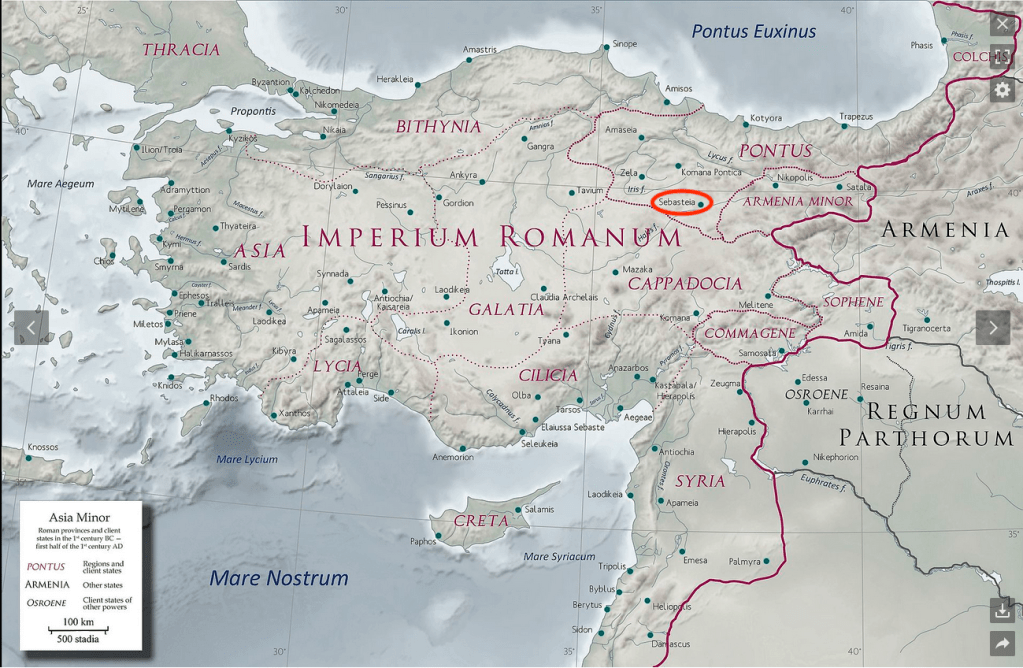
Anatolia in the early 1st century AD with Armenia Minor as a Roman client state. To sum up, though Armenians have lived in the area around and to the east of Sepastia for over 1000 years, they have usually been a minority, under another ruler – Persian, Roman, Greek, Turk, etc.
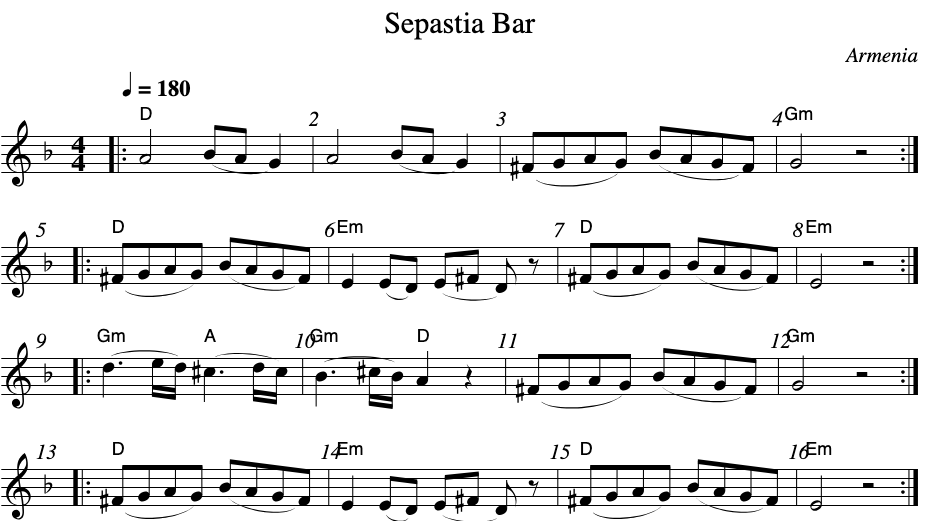
Sepastia Bar – the melody
There are many (similar) dances called Sepastia Bar (Bar is an Armenian term for dance). All are danced to the same melody, but some start at different places.
2013. Caption: John Vartan on oud and Ohannes on Doumbek. Playing Sepastia Bar (Sepo Bar), an Armenian Traditional line dance song. Visit http://JohnVartan.com to find out more about him and to contact him. Starts at measure 1. https://www.youtube.com/watch?v=ZU76x79PvUQ
There are MANY (slightly different) versions of Sepastia Bar (Sepo). This is due to the region containing many isolated villages (each with their own way of dancing), further scattered by the Armenian Genocide. Survivors fled to Armenia, or settled in different parts of the USA and other countries.
Caption (Google translated); Three legs (Sebastia). “Lernapar” traditional song-dance group performs. Artistic director: Gagik Ginosyan. 2019. https://www.youtube.com/watch?v=zwbkjgQD3gU
1993. Caption: Arsen Anooshian (3rd dancer from left end of line) leads Sepo. Sepo is essentially the same dance as Sepastia Bar but danced with more energy and claps.https://www.youtube.com/watch?v=9hhEvG1uIbM
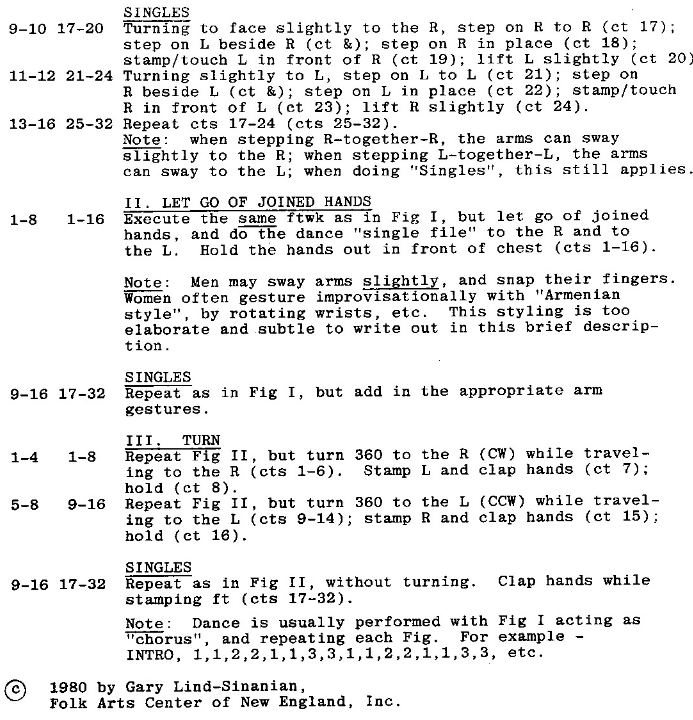
Caption: Nor Arev Armenian Dance Ensemble Dance Preservation Project funded by Maryland Traditions, Maryland State Arts Council Sepastia Bar – Dance from Sivas. Sources: Adrian Amirian (Boston); Richard and Iris Kassabian (who staged this dance and added the choreographed arm movement in the 1950s for the Armenian Dance Society of NY) Collected by Susan and Gary Lind-Sinanian. Music; Richard Hagopian. 2021. https://www.youtube.com/watch?v=RQdN_VkeDIw
Ron Wixman, Steve Glaser, Richard Kassabian version
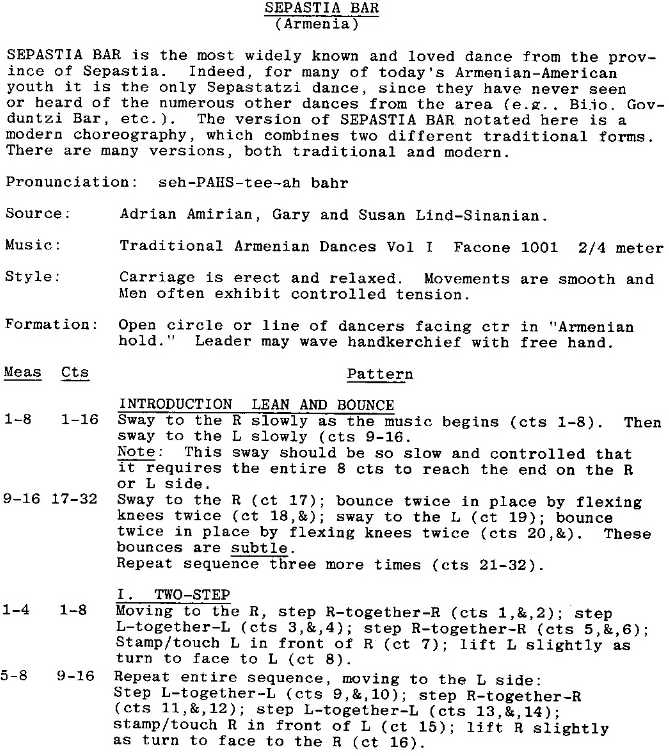
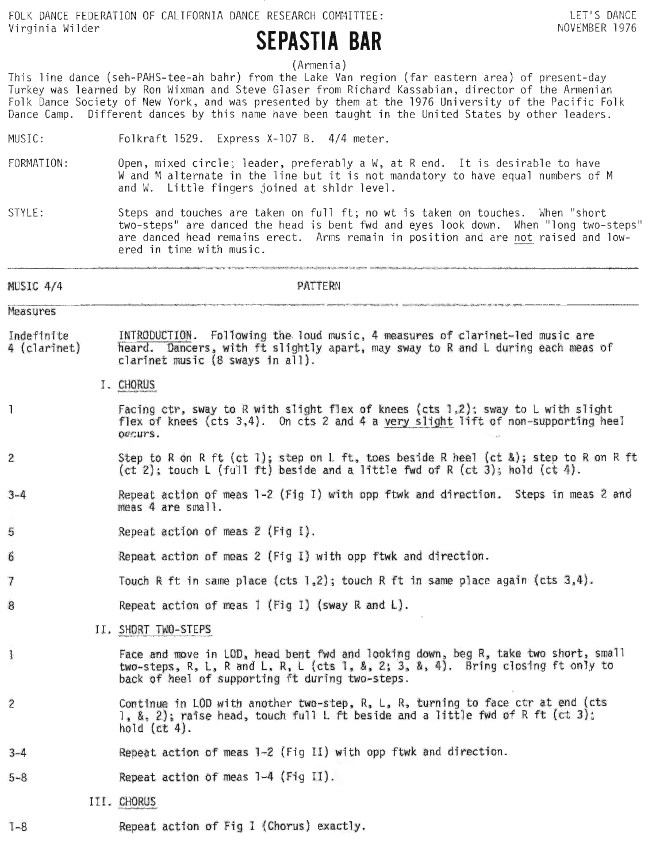
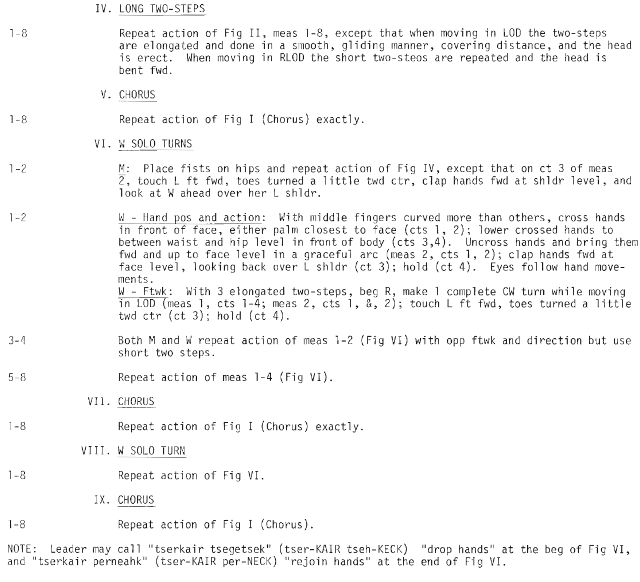
This line dance (seh-PAHS-tee-ah bahr) from the Lake Van region (far eastern area) of present-day Turkey was learned by Ron Wixman and Steve Glaser from Richard Kassabian, director of the Armenian Folk Dance Society of New York, and was presented by them at the 1976 University of the Pacific Folk Dance Camp. Different dances by this name have been taught in the United States by other leaders.

 Folkdance Footnotes