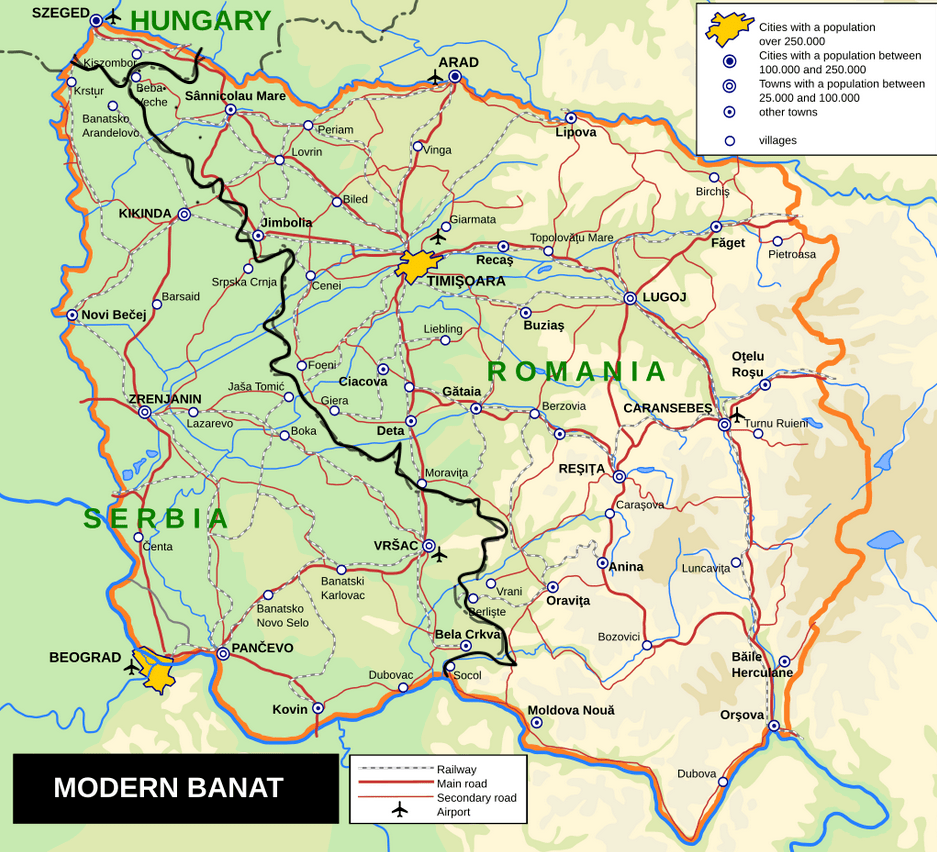
Banat didn’t become part of Romania until after WW1, (1920, to be exact), when it was severed from the former Austro-Hungarian Empire and divided between Serbia, Romania, and a bit left for Hungary.
Music, Songs
2021. Caption: Nicu Novac – Te duc mandrulita mea-n biserica Google translate Nicu Novac – “I’ll take you to church, my little mandrulita”- Hora banateana din Muzica din Banat https://www.youtube.com/watch?v=Im8Q9zjQ9sQ
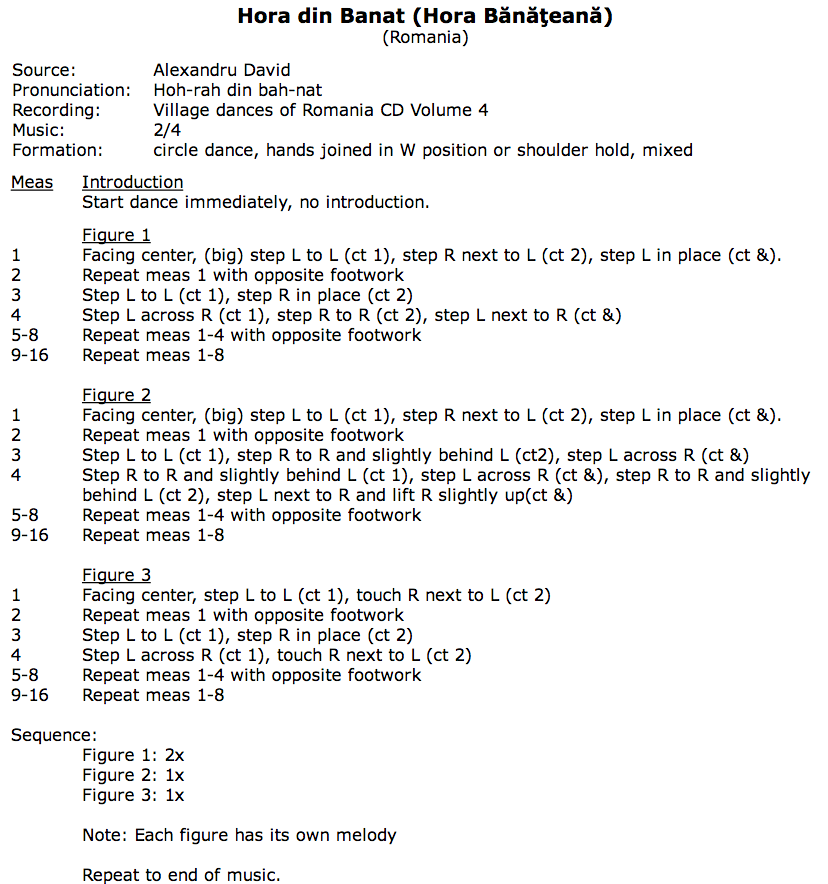
The basic dance of Banat is a simple 5 steps forward and 5 steps back, in a Slow, Slow, Quick Quick, Slow pattern. The pattern is essentially the same in Serbia, in dances like Setnja and Devojacko.
Caption: The Romanian Folk Dance Ensemble of the Romanian Association ARTA from Kitchener, Ontario, Canada, performing the dance Hora from Banat at Williamsburg Festival in Kitchener, September 2018, in authentic traditional Romanian costumes. https://www.youtube.com/watch?v=S_mvYf-Owsc
Caption: Dansuri populare pentru incepatori – Timisoara. Google translation: Folk dances for beginners – Timisoara. This dance adds hand movements – up for forwards, down for backwards. https://www.youtube.com/watch?v=HfOmxiT9_ZY
2024. Another wedding party. Same S,S,QQ,S, rhythm, slightly different placement of feet, taps added to the S steps. Best seen 4:10-4:30 https://www.youtube.com/watch?v=l2-O3R7cckk
Romanians at a social event are there to demonstrate by their presence their connection to the people in whose honour the event is celebrated. Dancing is a way to see and be seen, fill the time, settle the stomach, work off the booze, socialize, etc. Dance steps are usually simple and repetitive.
When taught to North Americans, the same dance gets more complicated, with variations on the basic step that I haven’t seen on YouTubes from Romania. I’ve concluded this has less to do with exaggeration or deception by teachers, and more to do with the needs of dancers, who get bored doing the same simple step over and over, while completing a jukebox full of different dances.

 Folkdance Footnotes