Popovičanka, Поповичанка – (L*) – Eastern Serbia – slight revision
*L stands for Living dance. For more information, click here
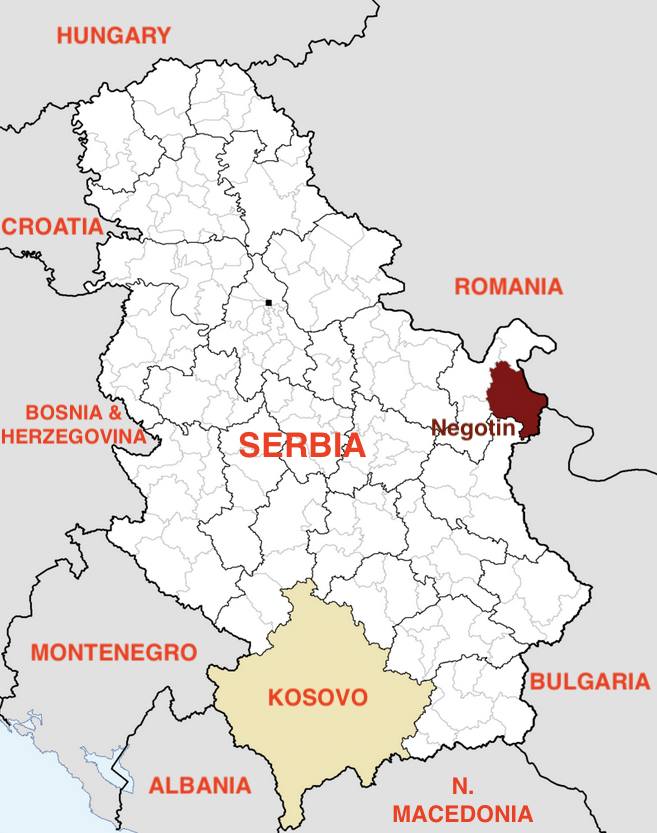
Popovičanka, means “Girl from Popovica”, a city in the Negotin region of Eastern Serbia. So says Slobodan Slović in his dance notes reproduced below. However I just received this email from Radboud Koop: On the meaning of the dance name: the literal translation is indeed “Girl from Popovica”, but the translation “Girl from …” usually has no direct connection to or relevance for the dance. Many names of folk dances in the Balkans (from Macedonia to Romania) are feminine inflections of place names, without that actually meaning that the dance is for girls or is connected to girls/women in a specific manner. So while Popovicanka does refer to the place Popovica, there might not be any relevance in the “girl from…” translation. Furthermore, while the dance name clearly refers to the place name, that does not necessarily mean that the dance is from that place. Often, a dance name that refers to a place can be found in other places (why would people from a place name their dance for their own place?), see for instance Cosnencuta (from Bucovina, Romania) which refers to the place Cosna but is danced under this name in many other villages than Cosna. Cheers, Radboud
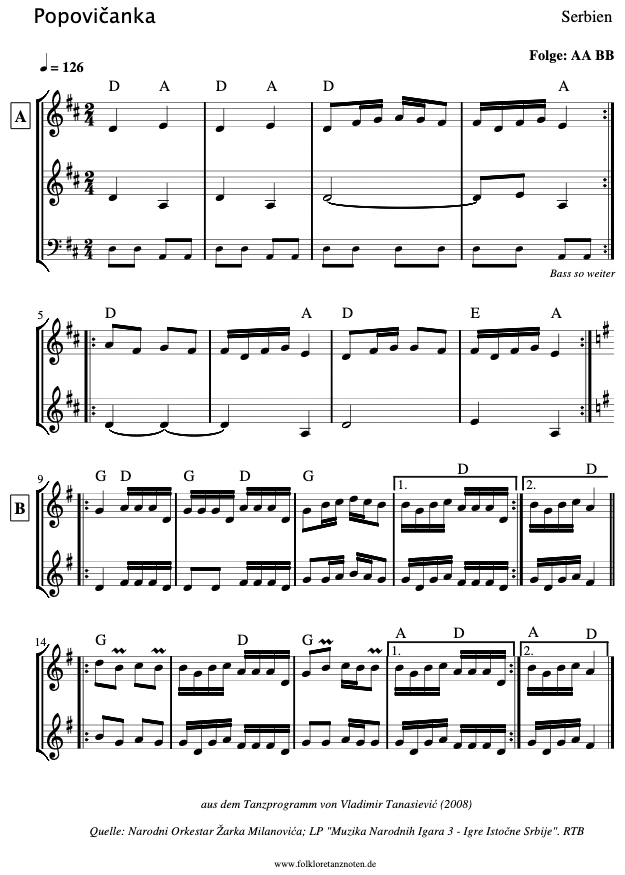
Popovičanka – the melody
The “Girl from Popovica” appears to be a melody only – at least I haven’t been able to find any lyrics.
Something similar. Suma Ograda, 2022. https://www.youtube.com/watch?v=euCwhJ_Nri4. Radboud Koop adds: You mention the music of Popovicanka in the YouTube video of “Suma Ograda, 2022”. This is actually an old recording made by the Dutch band “Ansambl Rakija” and issued on LP in 1976 by Nevofoon 15016, side A band 9 (LP title “Joego Slavië zingt en danst” [Yugoslavia sings and dances], see https://www.discogs.com/release/12991752-Ansambl-Rakija-Joego-Slavie-Zingt-En-Danst). This LP accompanied a Yugoslavian folk dance program for the Dutch recreational folk dancers collected by the Dutch folk dance teacher Frits Meijer. In the accompanying dance description booklet there is no additional information about the dance except that it is a dance from eastern Serbia, but I assume the source of the dance is Desa Djordjevic and/or Rickey Holden, because it consists of basically the same steps. The 2022 YouTube post of this music uses the fake name Suma Ograda, which is a fantasy word referring to the personal name of the Dutch publisher of this LP (there exists no orchestra or person with this name).
Music by the orchestra of Žarko Milanović, issued on the RTB 2310228 LP from 1987 Muzika narodnih igara – 3 Igre istocne Srbije, can be found here https://www.youtube.com/watch?v=g8x3qtQEpwA. This LP contained dances from the program of Desa Djordjevic and it included in the booklet a brief dance description (below).May be downloaded at: https://www.folkloretanznoten.de/Popovicanka2.pdfSource: email from Radboud Koop (see comment above)
Another, quite different melody labeled Popovičanka. One could dance Popovičanka to this melody, and it speeds up at the end, like other versions. 2018. https://www.youtube.com/watch?v=TI-mLkegkXA
Popovičanka – the simple Living dance
Although all instructors who have taught Popovičanka say the dance is native to Negotin, the Serbian region closest to Bulgaria and Romania, and Slobodan Slović says that Popovičanka refers to a girl from the village of Popovica (see Radboud Koop’s comment at the top of the page), currently I can find no YouTube examples of Popovičanka being danced in that area. However, I did find two examples of the dance, using the same melody, being danced in non-performance settings in Hungary. Wikipedia says“The Serb community in the territory of present-day Hungary has its origin in migrations from the territory of medieval Serbian states during and after the Ottoman conquest of these states.” For more, click the Wikipedia link.
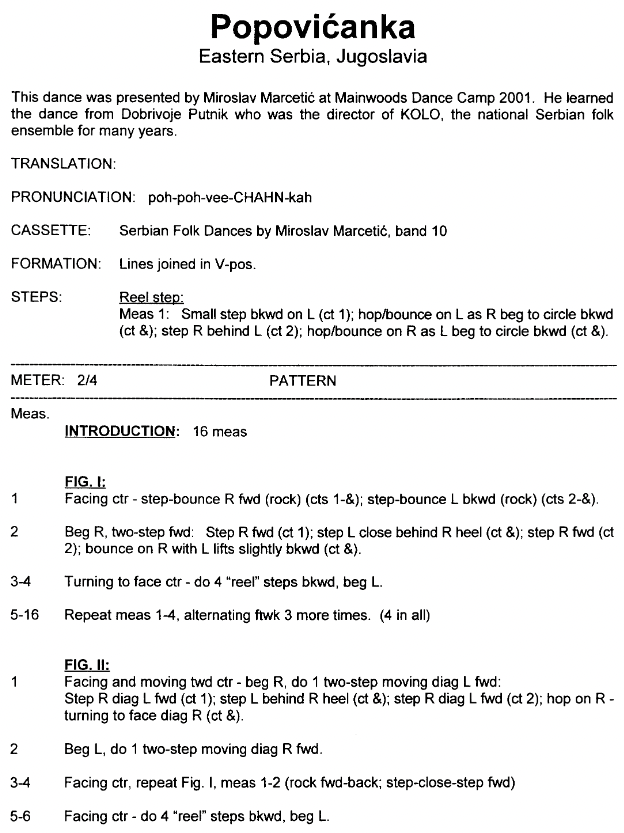
Here’s a simple “Living” version of Popovičanka (described below by Djordjević and Holden). Forward and back only, same steps each time. Source: Zoltan Meszaros, 2014. No caption with this YouTube, but the person posting has a Hungarian name and also has a posting for an apartment for rent in Pecs, southern Hungary. https://www.youtube.com/watch?v=fEuIZUtxu4Q
Caption: JUICE team band. Orkestar JUICE. Hungary, Baranya, Mohács, Wedding, Ball, Festival, Party. Dec 31, 2021. The dancers appear to be doing steps similar to the YouTube above.https://www.youtube.com/watch?v=DRbdVBtFQrA
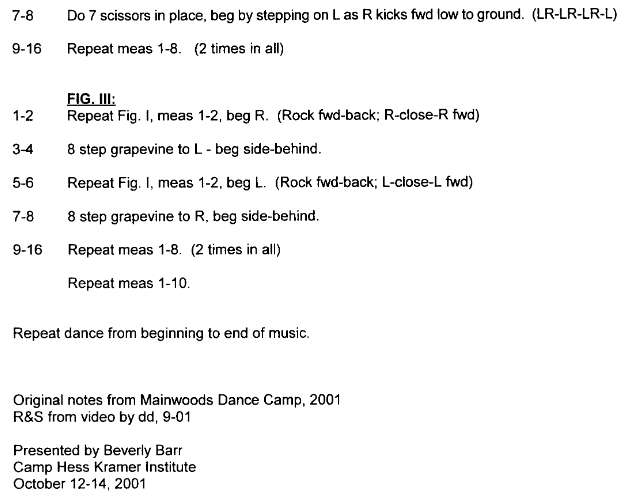
Caption: Zarko Milanovic: SKUD Oplenac & Ansambl Kolo, Toronto, Canada. Several variations, which appear to be a combination of the Djordjević and Marcetić versions. https://www.youtube.com/watch?v=yZtAQevL4FI





 Folkdance Footnotes